

- 8. May 2026
Final EASI ZERo Academy workshop presents promising results from real-world demo site
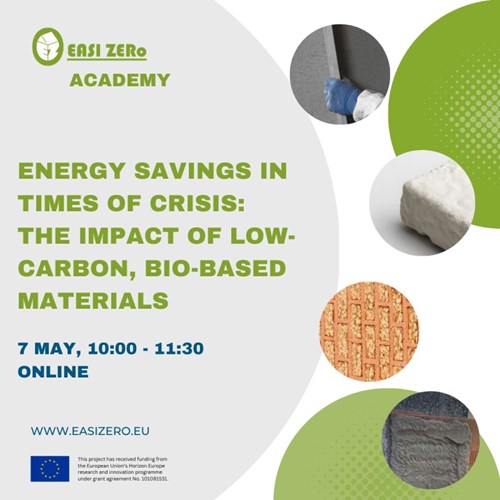
In the third and last installment of the EASI ZERo Academy, held online on 7 May 2026, we looked at real-world results from an EASI ZERo demo case and what they mean for energy renovation in Europe.
The session brought together project partners, experts and participants interested in the future of energy renovation in Europe, especially in times of rising energy prices. The workshop looked beyond laboratory results to explore how EASI ZERo materials behave in actual demo cases, and what these findings mean for energy savings, life cycle assessment and market uptake.
Keep reading to get the detailed overview of the session, or watch the recording back here
Real-world testing brings valuable insights
We took a close look at our demo case in Norway, where EASI ZERo materials are tested in a very cold climate. The findings presented were encouraging. In the Norwegian demo case, the EASI ZERo envelope materials showed energy savings of up to 45%. This is an important result for the project, as it confirms the potential of low-carbon and bio-based materials to support deep energy renovation while also reducing the environmental impact of construction products.
Life cycle assessment depends on context
The session also explored the life cycle assessment (LCA) of EASI ZERo materials. A key takeaway was that real-world conditions reveal that context matters when assessing environmental impact.
The environmental performance of a material is shaped by factors such as:
- the building type and its existing condition;
- local climate and weather patterns;
- the energy mix used in the region;
- transport distances and supply chains;
- how the material is installed, maintained and eventually reused or disposed of.
Material passports can support transparency and trust
As construction becomes more data-driven and circularity becomes a stronger policy and market priority, stakeholders need reliable and accessible information about the products used in buildings. Material passports can help centralise this information by bringing together key data on product composition, environmental performance, technical characteristics, reuse potential and end-of-life options.
Technology readiness is advancing, but policy support is still needed
The workshop showed that the EASI ZERo materials are reaching a promising level of technological maturity. The real-world demo results suggest that these solutions can deliver meaningful energy performance benefits while using bio-sourced and recycled resources.
However, technical readiness alone is not enough to guarantee market success.
For innovative materials to scale, they need the right enabling conditions. This includes supportive policies, clear certification pathways, consistent standards and procurement practices that recognise environmental and social value. Without these conditions, low-carbon solutions may struggle to compete with conventional materials that already benefit from established supply chains, market familiarity and economies of scale.
Looking beyond purchase price
A particularly important discussion point was the difference between the purchase price of a product and its real cost or long-term value.
Sustainable construction materials can sometimes face barriers if decisions are based mainly on upfront cost. However, this approach does not always reflect the broader benefits a product can provide over its lifetime.
For example, bio-based and low-carbon materials may contribute to:
- lower operational energy demand;
- reduced life cycle emissions;
- improved indoor comfort;
- potential health and safety benefits;
- lower environmental impacts at end of life;
- better alignment with future regulatory requirements.
These benefits matter to building users, owners and society as a whole. The workshop highlighted the need for more nuanced conversations about value, especially when comparing innovative materials with conventional products.
If Europe is to accelerate building renovation while meeting climate goals, decisions will need to account for more than the initial purchase price.
From real-world results to wider adoption
A central message from the third EASI ZERo Academy workshop was that real-world evidence matters.
The results from EASI ZERo demo cases show that low-carbon, bio-based building envelope materials can perform effectively in practice, including under demanding climatic conditions. At the same time, the session showed that performance must be understood in a broader context, including life cycle impacts, local conditions, data transparency, market readiness and policy support.
For the EASI ZERo project, these learnings are highly relevant. The project is developing and validating an easy-to-install building envelope system using bio-sourced and recycled materials, including wood, mycelium and recycled construction waste. By combining high energy performance with low emissions, EASI ZERo aims to support the renovation of European buildings and contribute to EU climate goals.
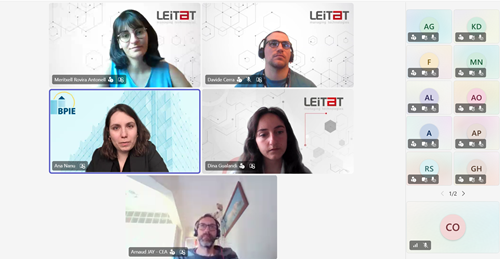
The session included contributions from:
- Arnaud Jay, CEA-Liten, who opened the workshop and introduced the EASI ZERo approach;
- Davide Cerra, Leitat Technological Center, who presented results on the energy-saving potential of low-carbon, bio-based materials from EASI ZERo demo cases;
- Meritxell Rovira Antonell, Leitat Technological Center, who shared insights on life cycle assessment and the overall environmental impact of the materials.